Ingrown Toenail Surgery
A straightforward, in-chair procedure that permanently resolves recurring ingrown toenails — no hospital visit required.
Ingrown toenails are one of the most common and most undertreated foot conditions. Many people put up with pain and infection for months or years before seeking help. Nail surgery is one of Angelica's core specialties — effective treatment is available, and for recurring cases, a permanent fix is just one appointment away.
Book an Appointment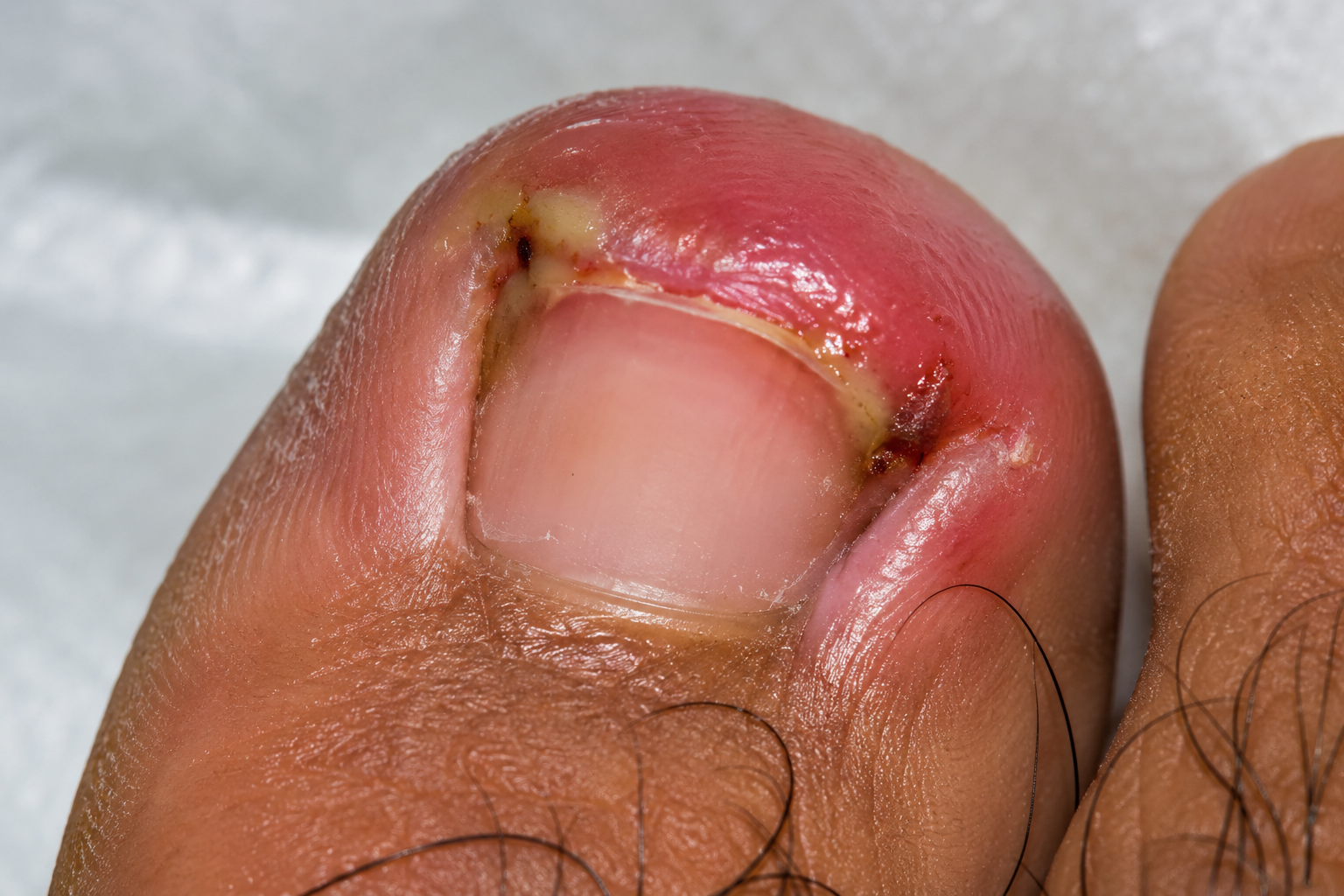
What Is an Ingrown Toenail?
An ingrown toenail occurs when the edge of the nail grows into the surrounding skin rather than over it, causing pain, swelling, redness, and sometimes infection. The big toe is most commonly affected, though any toe can be involved.
Left untreated, ingrown toenails tend to worsen. Infection can develop and spread, and the discomfort can affect walking, exercise, and daily life. Early treatment leads to faster resolution — and for recurring cases, surgery removes the problem permanently.
Conservative Treatment
For mild or first-presentation ingrown toenails, conservative care is often effective and is always assessed first. This may include:
- Careful nail trimming and edge removal
- Debridement of inflamed or infected tissue
- Nail packing or splinting to guide regrowth
- Wound dressing and infection management
- Advice on footwear and ongoing nail care
Conservative care works well for many patients. However, if the ingrown nail is recurrent, deeply embedded, or repeatedly infected, surgical treatment is the more effective long-term solution.
Partial Nail Avulsion (PNA)
Partial nail avulsion is a minor surgical procedure that permanently removes the offending edge of the nail. It is one of Angelica's core specialties — performed in-chair at the clinic under local anaesthetic, taking around 30–45 minutes, with a success rate above 95%.
A chemical (phenol) is applied to the nail matrix after removal to prevent that edge from regrowing. The result is a slightly narrower nail that looks and functions normally — without the recurring pain or infection.
What to Expect
The procedure is straightforward and well-tolerated by most patients. Here is what the appointment involves:
- Local anaesthetic — the toe is numbed before any treatment begins. You will feel pressure but not pain during the procedure.
- Nail edge removal — the problematic edge of the nail is carefully separated and removed.
- Phenol application — a chemical is applied to the nail root to prevent regrowth of that edge.
- Dressing and aftercare instructions — the toe is dressed before you leave, and you will be given clear instructions for home care.
Most patients walk out of the clinic immediately after the procedure. A follow-up appointment is scheduled to check healing and remove the dressing.
Recovery
Recovery after PNA is typically straightforward. Most patients return to normal daily activities within a day or two. Some tenderness and minor discharge from the nail fold is expected in the first week and is a normal part of the healing process.
- Wear open or loose-fitting footwear for the first few days
- Keep the dressing clean and dry until reviewed
- Avoid swimming, sport, or prolonged standing for one to two weeks
- Attend the follow-up appointment for dressing removal and wound check
Full healing typically takes three to six weeks. Once healed, the nail looks cosmetically normal and the problem does not return.
"Ingrown toenails are very treatable — and for recurring cases, surgery means you never have to deal with it again."Book an Appointment